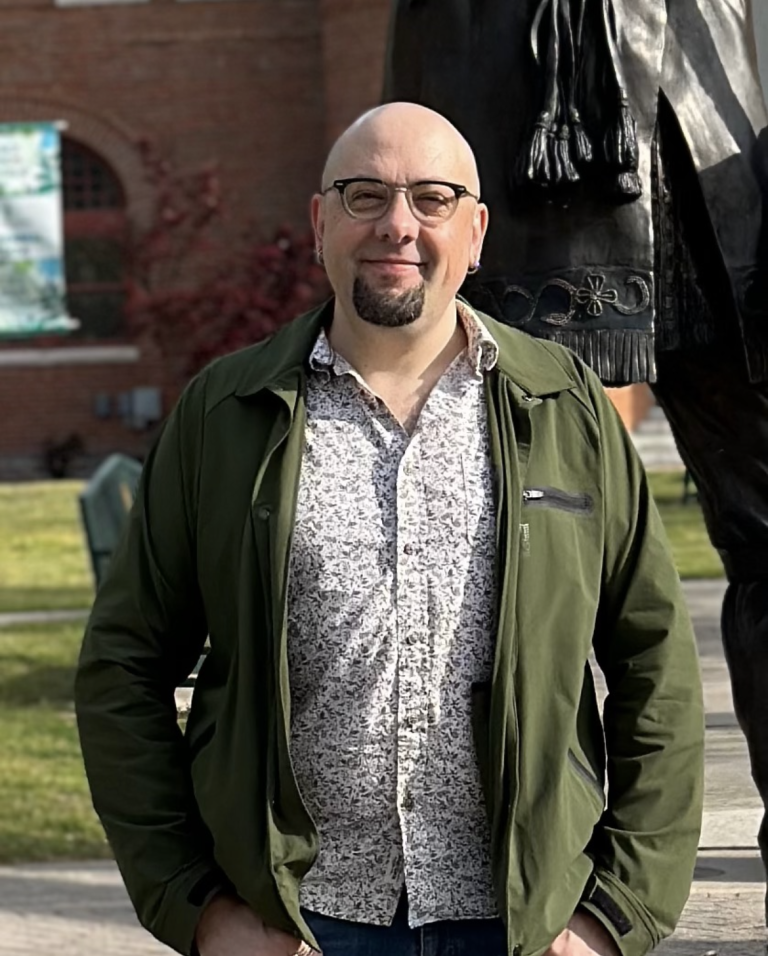
CIS Assistant Professor Pasang Yangjee Sherpa was featured in a recent episode of the BBC World Service’s The Climate Question, exploring how melting glaciers and changing climate conditions are reshaping life in Nepal.
In the episode, titled “How will melting glaciers change Nepal?”, Sherpa joins glaciologist Tenzing Chogyal Sherpa of Utrecht University to discuss the growing risks facing communities in the Himalayas. Hosted by Jordan Dunbar, the conversation examines the impacts of melting glaciers and glacial lake outburst floods (GLOFs), as well as the broader cultural and economic consequences of a changing mountain environment.
Drawing on her research on climate change and Indigenous communities in Nepal, Sherpa discusses how environmental changes are affecting farming, herding, tourism, wildlife, and everyday life in the Himalayas. The episode also considers the experiences and knowledge of communities living with these changes, including the challenges of adapting while maintaining cultural practices and connections to place.
The conversation highlights the particular vulnerabilities of communities in the Khumbu region, including the risks posed by glacial lakes and the importance of early warning systems and locally informed approaches to adaptation. It also explores the wider implications of Himalayan climate change for communities and populations downstream.
Recorded in July 2026, the episode considers these issues in the context of a rapidly changing Himalayan environment and asks an important question: how can mountain communities adapt while sustaining their livelihoods, cultures, and ways of life?
Listen and watch: How will melting glaciers change Nepal? — The Climate Question, BBC World Service
Pasang Yangjee Sherpa is an anthropologist and Assistant Professor at the University of British Columbia’s Centre for Interdisciplinary Studies. Her research focuses on climate change and its impacts on Indigenous communities in Nepal, with particular attention to the social, cultural, and political dimensions of environmental change.